Highly durable, wind-resistant, and water-efficient systems optimized specifically to resolve Bahamian limestone soil restrictions and freshwater challenges.
The Commonwealth of the Bahamas faces a compounding set of agricultural challenges. Composed of over 700 islands and cays, the nation imports upwards of 90% of its domestic food supply, creating extreme vulnerability to global supply chain shocks, fuel surcharges, and currency fluctuations. Traditional farming is severely limited by the local geology: the soil consists primarily of oolitic limestone, which yields a thin, highly alkaline topsoil poor in essential organic matter and water-holding capacity.
Furthermore, climate change presents an existential threat to Bahamian agriculture. Rising sea levels increase saltwater intrusion into the fragile freshwater lenses (ghybens) that supply the archipelago's irrigation water. Coupled with the rising frequency of devastating Category 4 and 5 hurricanes, open-field farming is becoming commercially unviable. Controlled Environment Agriculture (CEA) utilizing robust Hydroponic and Aeroponic systems offers the only scalable, sustainable pathway to food security in Nassau, Freeport, and the Family Islands.
Engineered for efficiency, stability, and extreme climate adaptation.
Deciding on the correct technological pathway based on crop dynamics, salinity profiles, and thermal variations in the Caribbean.
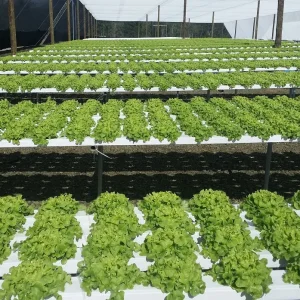
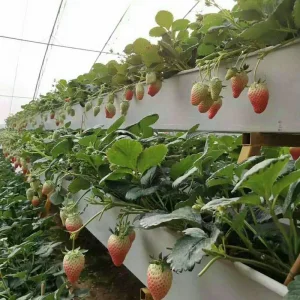
Designed primarily for leafy greens, culinary herbs, and strawberries. A continuous, thin stream of oxygen-rich nutrient solution flows over the roots. Extremely effective for rapid growth cycles, low capital expenditure, and simple operations under Caribbean conditions.
Ideal for hot island climates where power fluctuations can occur. Root zones are fully submerged in aerated water reservoirs. The thermal mass of the water buffers against rapid temperature spikes, preventing root shock during midday heat.
Roots are suspended in air and misted with precise micron-sized nutrient droplets. This method maximizes root oxygenation, resulting in growth rates up to 40% faster than standard hydroponics. HPA uses the absolute minimum amount of water, making it perfect for hyper-arid cays.
Providing the deep botanical, biochemical, and agricultural science foundation that powers our advanced hydroponic nutrients and cultivation platforms.
Since its establishment, Hangzhou Sativa Plant Co., Ltd. has adhered to the development philosophy of “From Plants, Research for Health.” Rooted in the field of natural plant extraction, the company focuses on the intensive processing and deep development of plant-based raw materials. With gallnut, Siraitia grosvenorii (monk fruit), turmeric, bitter orange, and Sophora japonica as its core resources, the company has established a stable supply chain and advanced production technology to transform natural plant materials into high-value functional ingredients.
The company’s main products include tannin, gallic acid, propyl gallate, mogroside (siraitin), curcumin, hesperidin, rutin, and other plant-derived compounds. These products are widely used in many industries such as pharmaceuticals, food and beverages, animal feed, textile processing, printing and dyeing, metallurgy, new materials, aerospace, and microelectronics. With reliable quality and competitive supply capability, the products are exported in large quantities to the United States, the European Union, Japan, Southeast Asia, and other international markets.
Guided by innovation and quality, Hangzhou Sativa Plant Co., Ltd. continuously strengthens its research and development capabilities, production technology, and quality management systems. The company integrates modern extraction technology, purification processes, and strict quality control standards to ensure that every product meets international requirements and customer expectations.
With advanced technical strength, stable production capacity, and consistent product quality, the company provides reliable functional ingredient solutions for industries such as food, pharmaceuticals, animal nutrition, and electronic materials. Through long-term cooperation with global partners, the company is committed to delivering efficient, safe, and sustainable plant-based solutions to customers worldwide.
To ensure high standards in management and product safety, the company has obtained a series of international certifications, including ISO9001, ISO14001, ISO22000, ISO45001, and ISO56005. In addition, the company is registered with HACCP, FAMI-QS, HALAL, KOSHER, and REACH, demonstrating its commitment to global regulatory compliance and food safety standards. It is also an enterprise that has obtained Advanced AEO Certification from Customs, reflecting its credibility and excellence in international trade operations.
Looking toward the future, Hangzhou Sativa Plant Co., Ltd. will continue to uphold its philosophy of innovation, sustainability, and health-oriented development, further expanding its plant extraction technologies and product applications. By combining natural resources with modern science, the company aims to create greater value for customers and contribute to the global development of natural, healthy, and sustainable industries.
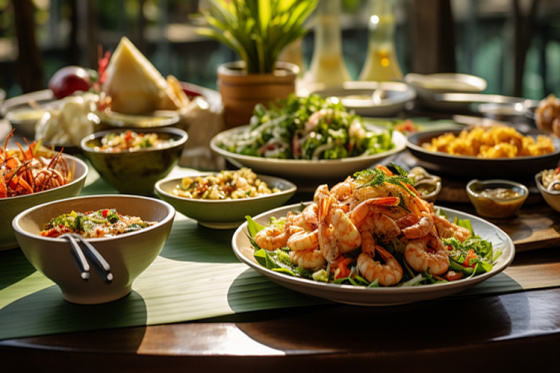
Crop & Food Safety Processing
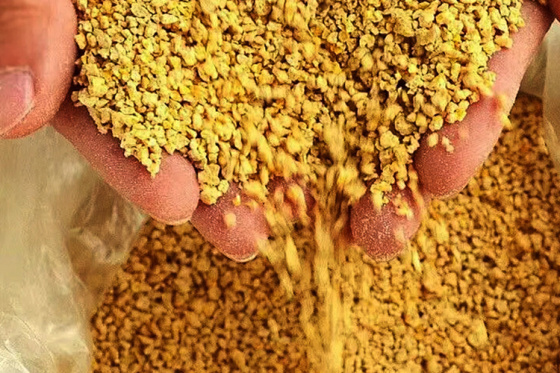
Animal & Plant Nutrition Solutions
Leveraging our parent enterprise's deep expertise in plant extraction, botanical compounds, and quality control systems, our hydroponic engineering division designs nutrient profiles and growth substrates with unparalleled biological efficacy. This integration of plant medicine and structural engineering ensures your Bahamian farm produces highly nutritive crops resistant to heat stress.
Where the future of soilless farming is heading, and how the Bahamas can position itself as a leader in Caribbean food sovereignty.
Energy costs in the Bahamas are among the highest in the region. The integration of high-efficiency photovoltaic (PV) solar panels directly with the variable frequency drive (VFD) water pumps of hydroponic and aeroponic systems allows farms to operate completely off-grid. This is particularly crucial during the post-hurricane recovery phases when central power grids are down for weeks or months.
Modern CEA systems utilize automated dosing systems that monitor pH, Electrical Conductivity (EC), temperature, and dissolved oxygen levels in real-time. By applying machine learning algorithms to historical crop data, our systems dynamically adjust nutrient profiles based on ambient temperature, humidity, and solar radiation, maximizing flavor profiles and growth velocities.
By connecting advanced reverse osmosis (RO) units directly to hydroponic nutrient tanks, brackish well water or raw ocean water can be cost-effectively converted into pure crop irrigation water. The reject brine can be utilized in secondary halophyte agriculture (e.g., growing sea beans/samphire) or redirected safely, creating a circular marine-agriculture model.
Utilizing natural botanical extracts (such as those researched by Sativa Plant Co.) to build crop immunity. By introducing plant-based elicitors into the hydroponic reservoir, crops produce higher levels of antioxidants, rendering them naturally resistant to standard root pathogens without the need for synthetic chemical fungicides.
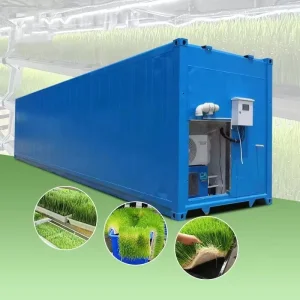
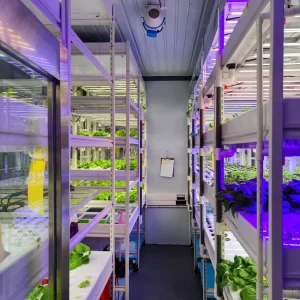
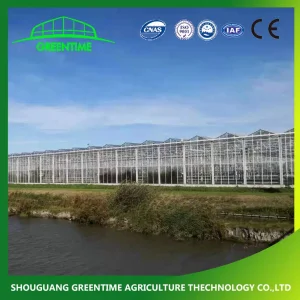
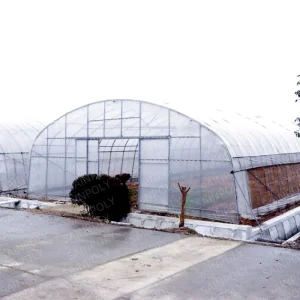
From compact container farms to sprawling commercial multi-span structures. Click to explore detailed mechanical specifications.
Providing deep structural, botanical, and logistics-related technical answers for prospective growers and purchasing directors in the Bahamas.
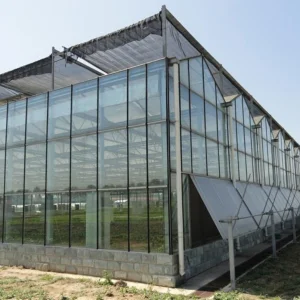
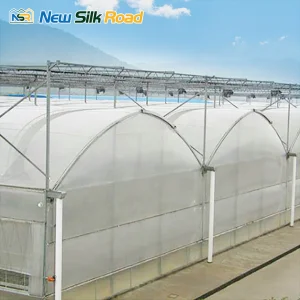
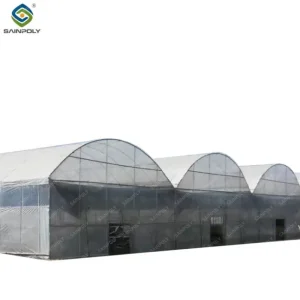
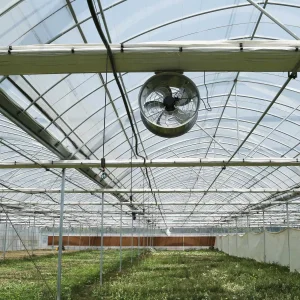
All our structural designs destined for the Caribbean market conform to strict ASCE 7 (Minimum Design Loads and Associated Criteria for Buildings and Other Structures) requirements. We utilize heavy-duty, hot-dip galvanized steel frames with arch pitches designed to deflect high winds. Our premium glass and gothic film options can be dynamically configured to withstand wind velocities up to 150-180 MPH. Additionally, we provide rapid-recovery film locking mechanisms and structural anchor reinforcements specifically engineered for sandy, coralline ground installations.
Our hydroponic and aeroponic systems utilize a closed-loop recirculating system that recycles 100% of the non-transpired nutrient solution. Compared to open-field farming, which loses massive quantities of water to ground infiltration and intense sub-tropical evaporation, our system reduces water consumption by 90% to 95%. Evaporative cooling systems are managed via automated climate controls that mist only when humidity drops below optimal thresholds, preserving your expensive desalinated water assets.
High nutrient reservoir temperatures can deplete dissolved oxygen levels, causing root rot (pythium). To mitigate this, we offer several engineering solutions: 1) Thermal insulation wrapping for all outdoor PVC channels and feeding lines; 2) Integration of inline nutrient chillers; and 3) DWC (Deep Water Culture) or hybrid aeroponic setups where larger volumes of water buffer daily thermal swings. We also configure automated irrigation cycles to trigger feed cycles during cooler dawn, dusk, and night phases.
Yes, absolutely. Our NFT PVC channels are manufactured using food-grade virgin PVC-U, ensuring they are free of plasticizers, heavy metals, and toxic phthalates. They are certified safe for organic and high-standard crop production. The plastics are stabilized with premium UV inhibitors to protect against degradation from the high ultraviolet index of the Bahamas, extending the typical physical lifespan of our channels and films to over 5-10 years of continuous use.
Yes. As an experienced exporter with Advanced AEO (Authorized Economic Operator) certification, we have streamlined clearing customs procedures internationally. We prepare all necessary shipping documentation, certificate of origin paperwork, and custom codes for smooth clearance at ports like Nassau (Arawak Cay) and Freeport. We ship all systems in securely packed shipping containers designed to endure maritime shipping conditions without movement or structural scratching.
Collaborate with our structural and agricultural engineers to design a system tailored to your island's wind zone, freshwater availability, and crop objectives.
 Sativa Plant